Half-Time Is the Point: Britain's Theatre Bars Come Into Their Own

There is a particular sound a theatre makes at twenty-past-eight: the low, collective exhale of two hundred people deciding, at once, that they have ten minutes and they intend to use them. Coats come off the backs of seats. Someone's programme slides to the floor. And then the whole auditorium funnels, with surprising good humour, towards the bar.
For years we treated the interval as admin — a lavatory stop, a queue, a plastic cup of something cold and slightly sweet. What's changing, quietly and across the country, is that people have started treating it as the point. Not an interruption to the play. A second event, running in parallel, in the foyer.
The bell is the whole idea
An interval is one of the last genuinely enforced pauses in British public life. Nobody can take a call. Nobody can slip away to check on anything. You are, for ten or fifteen minutes, in a building with a few hundred strangers and no particular obligation except to be back in your seat when the bell goes.
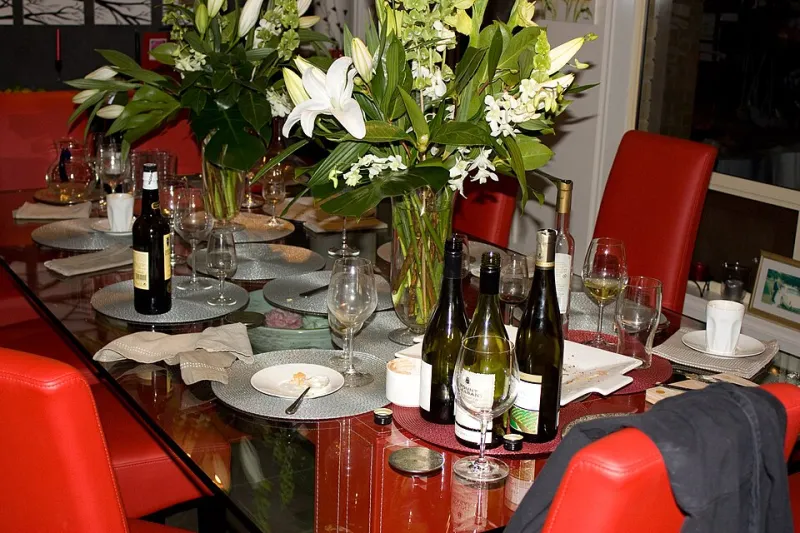
That is an extraordinary thing to be offered in 2026. We spend our days shaving minutes off everything, and here is an art form that hands you a quarter of an hour and refuses to let you spend it on a screen. Theatres have noticed. Foyers that were once trestle tables and a card machine have been rethought — better sightlines across the room, bars split so the queue has somewhere to go, pre-order points, a decent sherry alongside the Sauvignon. The big London houses have led the way, but the real pleasure is regional: a reopened bar at a city playhouse, a café that stays open for the second half of the evening, a small studio theatre where the person pouring your drink is also the person who tore your ticket.
Why ten minutes feels like a lot now
Ask anyone who has been to the theatre lately what they remember. It is rarely the interval, but it is rarely only the play either. It is the half-conversation with the stranger beside you about the first act — the bit they found funny, the bit they found baffling, the actor they recognise from a television series they cannot quite name.
That is a strange and lovely kind of conversation, because it has a built-in ending. Ten minutes is not long enough to become awkward and not short enough to be meaningless. You can say something honest about a play to someone you have never met, and then the bell rings and you both go back to your seats and that is that. No numbers exchanged, no follow-up. The interval is, in the best sense, a one-off.
What a good interval bar actually does
A well-designed interval is almost invisible. You notice only that it worked.
The good ones do three things. They shorten the distance between wanting a drink and holding one, usually by pre-order — order before the first act, collect at the interval, no queue, name on a list. They give you somewhere to stand that is not directly in the doorway. And they understand that most people want one drink and a bit of company, not a full second dinner.
The less good ones have a single till, a queue that snakes back into the stalls and a card machine that goes down at 8:19pm. If you have ever spent an interval watching the back of a stranger's head, you know exactly the difference.
The ten-minute catch-up, done properly
Treat the interval as a small, well-made thing rather than a scrum. A few suggestions, learned the hard way.
Order before the first act. Almost every theatre with a bar now offers it. It costs you ninety seconds at 7:25pm and gives you back your entire interval.
Go upstairs. The ground-floor bar is where everyone goes. The one on the first floor, or the little café by the balcony, is usually half as busy and twice as nice.
Loos first, then drinks. It is not glamorous, but it is efficient, and efficiency is what buys you the conversation.
One drink, not two. A second round is a gamble against the second bell, and the second bell always wins.
Ask one good question. Not 'what do you do?' — 'what did you think of the mother?' Ten minutes is plenty for that, and it is a better use of the time than discussing the parking.
A short etiquette, for the good of the row
Sit near the aisle if you know you will want to move. Let the row out before you go. And if you are the person who returns after the second bell with three drinks and a programme, holding up eleven people in the dark — well, we have all been that person once. Try not to make it twice.
What to order, and where to stand
Something short and cold is the classic: a sherry, a small negroni, a glass of something fizzy that does not require reverence. November evenings being what they are, a hot toddy or a pot of tea is not the defeat it once was — several theatre cafés now do both properly.
And standing is fine. Standing is, in fact, better. The best intervals happen at the edge of a room, half-leaning on a ledge, talking to someone whose name you will never learn about a play you will both remember.
The bell will ring. It always does. But the ten minutes before it are, increasingly, the reason we go.