The Three-Hour Table: Britain’s Quiet Case for Lunching Like You Mean It
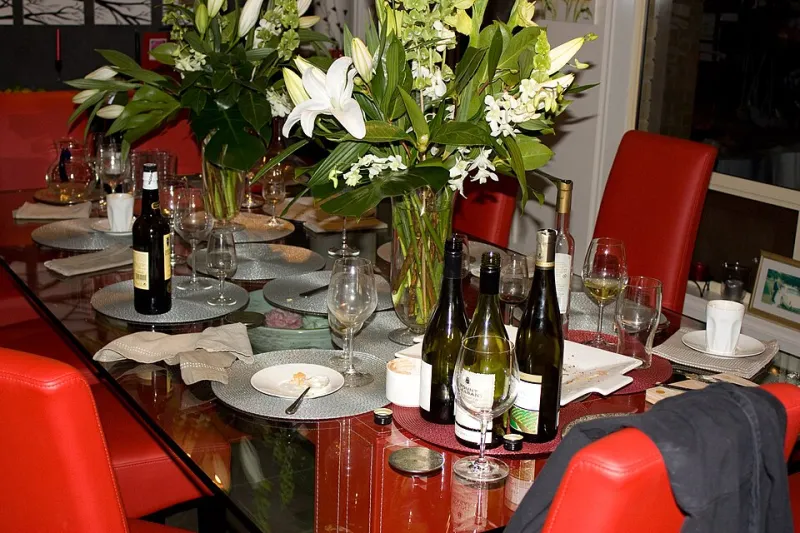
Photo: Rexness, CC BY-SA 2.0, via Wikimedia Commons
On a Friday at half past two, something unusual happens in the City of London. The pavements thin out, the wine lists come off the shelf, and a certain kind of table — the one with a white cloth and no particular hurry — fills up with people who are not celebrating anything. They are simply having lunch. Properly.
For a long time, the British lunch was a sandwich at a desk, a sad little transaction between meetings. Then it became a badge of ambition: the working lunch, the power lunch, the three-course apology. Now, in 2026, it is becoming something quieter and more interesting. People are clearing afternoons. They are ordering the second coffee. They are staying for pudding.
The Friday afternoon migration
You can see it most clearly in the City, where Friday has become the new Thursday. Hybrid working has loosened the collar of the week, and a table at 1pm on a Friday no longer feels like skiving. It feels like a small correction. The lunch itself is not the boozy business lunch of the 1980s, thank goodness. It is lighter, slower and more deliberate: a plate of pasta, a glass of something white, a conversation that does not need to end because someone has a 3pm call.
Outside London, the same instinct takes a different shape. On Sundays, country pubs fill with families and friends who have booked for noon and leave at four. The roast is almost beside the point. The point is the stretch of time, the second pot of tea, the walk afterwards. The long lunch is not about excess. It is about allowing a meal to be the whole event, rather than a pause before the next one.
Why now
Part of this is practical. Flexible working has made the midweek lunch possible again, and the cost of going out means that when we do, we want it to be worth the trouble. Part of it is cultural. Britain has spent decades admiring the continental approach to lunch — the French two-hour break, the Spanish sobremesa, the Italian Sunday table — while quietly doing the opposite. Something has shifted. We are tired of eating at our desks. We are also, perhaps, a little lonelier than we were, and the long lunch is a very good excuse to sit opposite someone for three hours.
The best version of it is not expensive. It is a table, a few good things, and no clock. It is the opposite of a dinner party, which so often comes with expectation and a napkin-folding anxiety. Lunch is forgiving. You can serve cold chicken. You can open a bottle of something ordinary. You can let people arrive late.
How to host one without turning it into a project
The first rule is to cook one thing well and buy the rest. A slow-braised shoulder of lamb, a big pot of beans, a whole roasted cauliflower — something that can sit in the oven and forgive you. Then bread, good butter, a sharp cheese, something pickled. Do not attempt a starter and a pudding and a fish course. The long lunch works because it is relaxed, not because it is impressive.
The second rule is to set the table early. Put out the glasses, the water, the salt. Fill a jug with flowers from the supermarket. The point is to make the room feel ready, so that when people arrive you are not still looking for napkins.
The third rule is to let the meal run. Do not clear plates the moment they are empty. Do not ask who wants coffee before the last person has finished. Leave the dishes where they are. The long lunch needs a certain amount of mess to feel human. If you are worried about the washing-up, soak the pans and deal with them later. That is what tomorrow is for.
Where to clear an afternoon
In London, the Drapers Arms in Islington is a masterclass in the unhurried Sunday lunch. Brawn on Columbia Road is the sort of place where a Friday lunch can slide into early evening without anyone minding. St John Bread and Wine in Spitalfields keeps things simple and precise, which is its own kind of luxury.
Outside the city, the Sportsman near Whitstable is worth the journey for a lunch that feels like a small pilgrimage. The Beckford Arms in Wiltshire does the country-pub version beautifully: open fires, long tables, no rush. The Bull at Charlbury in the Cotswolds is another one to book well ahead. None of these places will hurry you. That is the point.
The long lunch is not a trend that needs a hashtag. It is a quiet return to something we already knew: that a meal is not just food. It is time, given generously. And in a week that moves too fast, three hours at a table might be the most restorative thing we do.