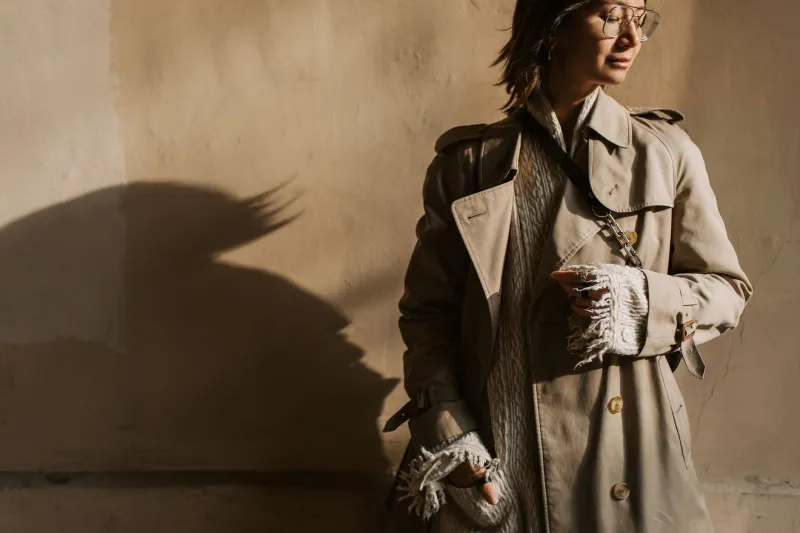
Inherited, Not Vintage: The Quiet Power of Wearing What Already Belongs to You
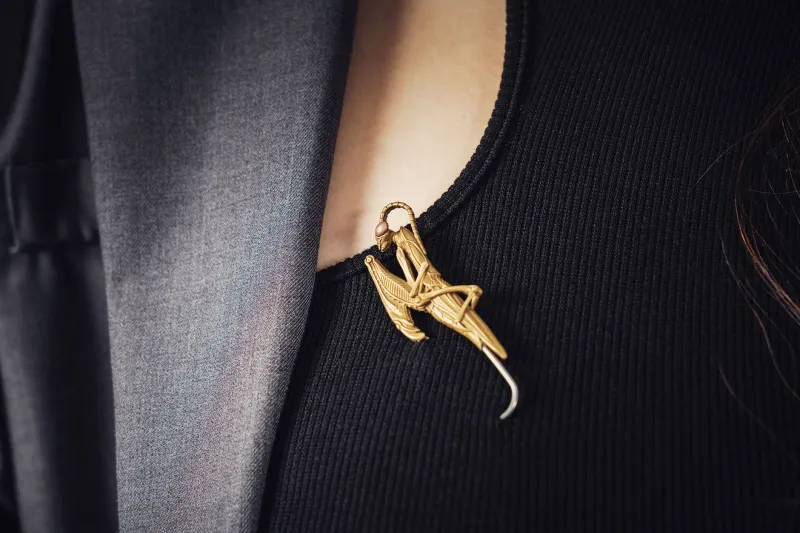
On a wet Tuesday in November, I watched a woman in a Peckham café fasten a grandmother's brooch to the lapel of a charity-shop trench coat. It was not a statement. It was a habit. That is the shift I keep noticing in 2026: heirlooms are no longer being saved for weddings and christenings. They are being worn to work, to dinner, to the bus stop, to the kind of ordinary days that make a wardrobe feel like a life rather than a shopping edit.
The Drawer Is the New Archive
For a certain generation of Briton, the family jewellery box and the wardrobe under the stairs have become the most interesting shops in town. A father's watch with a scratched crystal. A grandmother's brooch shaped like a thistle. A coat that was once a grandfather's and has since been shortened, relined and given a second life. None of it is new. All of it is personal.
The appeal is not simply nostalgia. It is specificity. In a market saturated with lookalike pieces and algorithmic recommendations, an inherited object carries something no new purchase can: provenance. It says where you come from, who wore it before you, and why it survived. Younger Britons, in particular, seem to be using these pieces to build wardrobes with memory and meaning, rather than wardrobes that merely photograph well.
Why It Feels Different Now
Part of this is practical. The past few years have made us all a little more interested in repair, resale and the quiet satisfaction of not buying new. Part of it is cultural. We are living through a moment when personal style is less about logos and more about narrative. The heirloom fits that mood perfectly. It is slow, intimate and impossible to mass-produce.
There is also the question of identity. A reworked coat or a serviced watch is not a costume. It is an edit of the family archive, worn by someone who has decided which parts of the past to carry forward. That is a very 2026 way of thinking about style: less about reinvention, more about inheritance, adjustment and care.
The Tailor's Rule: Fit Before Feeling
The first lesson from UK tailors is simple: proportion comes before sentiment. A beautiful piece that does not fit will always feel like a costume. A plain piece that has been properly adjusted will feel like yours.
Tailors I have spoken with in Leeds and Bristol say the same thing. Start with the shoulders and the seams. Do not try to turn a coat into a different garment through wishful thinking. A sleeve can be shortened. A waist can be taken in. A lining can be replaced. But the fundamental architecture of a piece should be respected. If a jacket is too big in the shoulder, it is probably not the jacket for you; if a coat is slightly long, it is often an easy fix.
For watches, the advice is equally restrained. A good watchmaker will service the movement, clean the case gently and leave the patina alone. Over-polishing a case is like over-sanding a vintage table: it removes the evidence of a life. The scratches are part of the point.
Restore, Don't Reimagine
Vintage specialists in Bristol and London are increasingly being asked to work on family pieces rather than sourced stock. Their advice is consistent: repair what is failing, stabilise what is fragile, and resist the urge to modernise everything.
That means replacing a worn lining but keeping the original buttons. It means mending a seam rather than recutting the whole garment. It means cleaning a textile gently and accepting that some marks will remain. Patina is not damage; it is biography. The goal is not to make an heirloom look new. The goal is to make it wearable again.
How to Wear It Without Looking Costume
The easiest way to make an inherited piece feel modern is to anchor it in the present. One heirloom at a time is usually enough. A brooch on a plain coat. A watch with a cotton shirt and denim. A reworked coat over a hoodie and straight-leg trousers. The contrast is what makes it feel alive rather than museum-like.
Scale matters too. A delicate chain can disappear under a heavy knit; a bold brooch can overwhelm a summer dress. Think about weight, colour and proportion. And do not be afraid to wear the piece repeatedly. Heirlooms are not improved by being saved. They are improved by being seen.
Costume happens when the piece is the whole outfit. Style happens when the piece is part of your ordinary life.
A Small Ledger of Memory
If you are lucky enough to have inherited something, treat it like a story worth keeping. Ask questions while the people who remember are still around. Write down who wore it, where it came from and what it meant. Photograph it. Store it properly. Wear it at least once a month, even if only to the supermarket.
A brooch on a coat, a watch on a wrist, a coat that has already lived a life before yours: these are not trends. They are the most personal things you can wear in 2026. And the best part is that they are already in the family.