The One-Inch Statement: Why a Brooch Is Britain’s Smartest Autumn Move
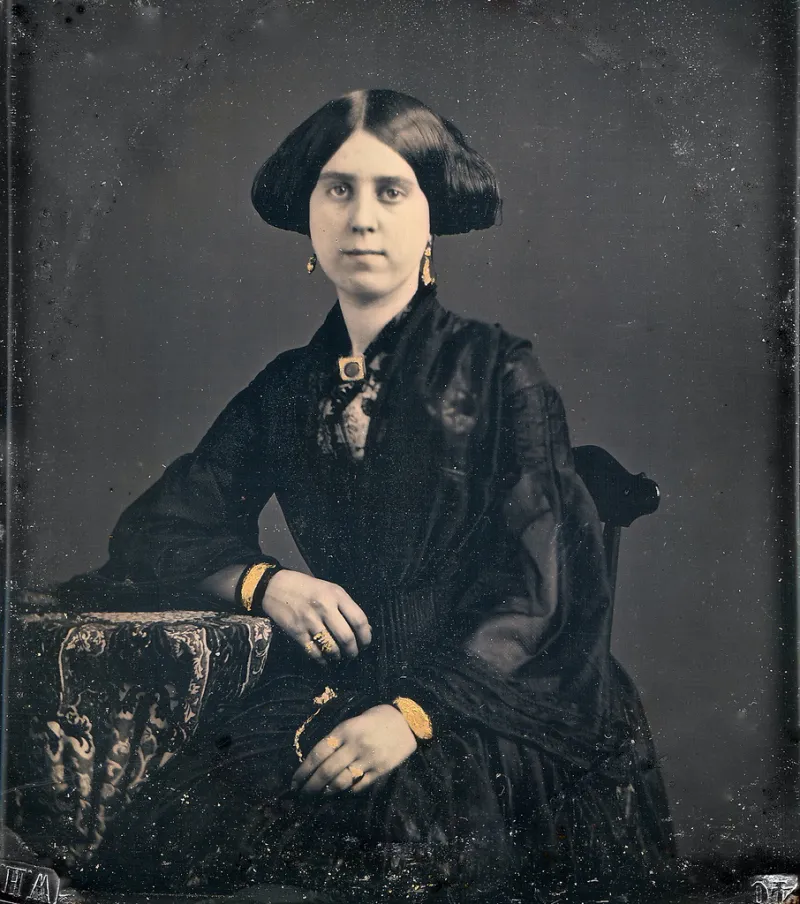
Photo: lisby1 (Lisby), Public domain, via Wikimedia Commons
There is a particular kind of British polish that arrives without fanfare. It is not the bag, nor the trainers, nor the very expensive coat. It is the small, deliberate glint at the lapel — the brooch, back on the streets and looking nothing like your grandmother’s jewellery box. Or, more accurately, looking exactly like it, but worn with a different set of rules.
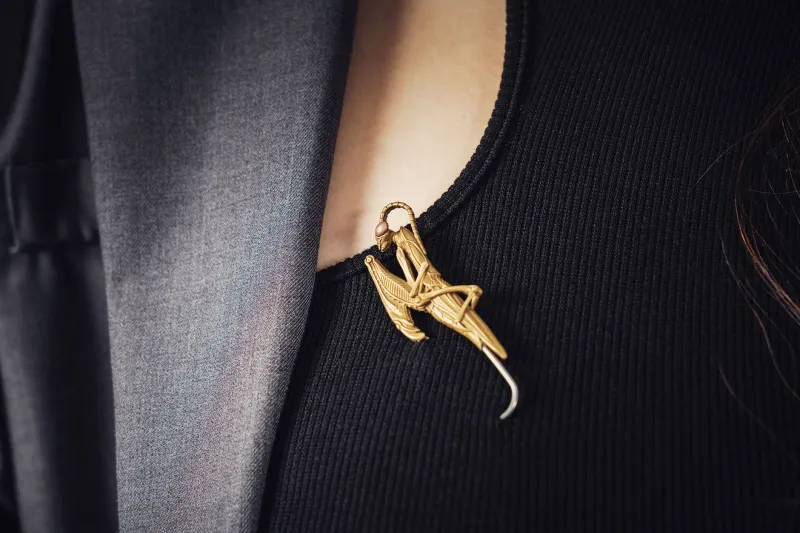
For years the brooch has been filed under occasion. Weddings, christenings, royal engagements, the odd Christmas lunch. It was heritage by default: cameo, pearl, a little too much gold. Then something shifted. On the Tube, on the school run, in the queue for a flat white, a single pin began appearing on wool lapels and plain crew necks. Not a cluster. Not a theme. One considered object, doing the work of a whole outfit.
The new rules of a very old accessory
The first rule is restraint. A brooch is not a charm bracelet; it does not need friends. One is the statement. Two can look like a collection, three like a jumble sale. Choose a single piece with a bit of weight — a chunky gilt flower, a slim bar of hallmarked silver, a modest pearl set in matte gold — and let it be the only thing happening at that altitude.
The second rule is placement. The obvious spot is the left lapel of a coat, and it remains the most reliable. But the brooch has loosened up. Pin one at the neckline of a fine-knit jumper, slightly off-centre, and a plain navy crew suddenly reads intentional. Fasten a small one to the strap of a leather shoulder bag, or to the knot of a scarf, where it acts as both jewellery and clasp. On a heavy November coat, a brooch at the collar can lift the whole silhouette, drawing the eye up and giving a round face or a sloped shoulder a bit of architecture.
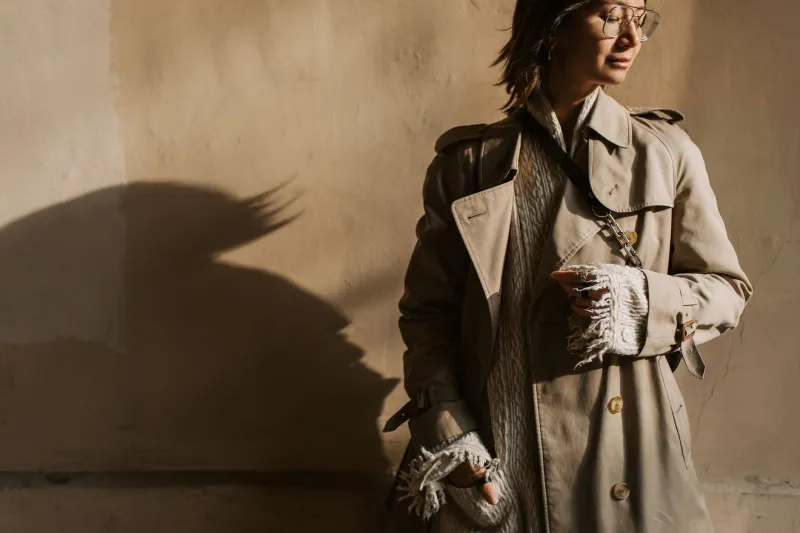
The third rule is contrast. The reason brooches looked dated for so long was that they were matched too carefully: pearl brooch, pearl earrings, pearl ring, sensible hair. The revival works because it is slightly wrong on purpose. A sparkly vintage pin on a utilitarian trench. A cartoonish acrylic flower on a serious wool blazer. A Georgian mourning brooch on a grey marl sweatshirt. The tension is the point. If it looks like it came with the coat, it probably isn’t doing enough.
Where to find one worth keeping
You do not need to spend a fortune, but you do need to look. The best brooches tend to be the ones that have already survived something. Vintage fairs are fertile ground: Newark Antiques Fair, the monthly stalls at Portobello, the jewellery cases at Ardingly. Look for a working clasp, a clean surface, and a maker’s mark if you can find one. A little tarnish is fine — it reads as character rather than neglect — but loose stones and bent pins are false economies.
If you prefer new, Britain has a quiet cohort of jewellers making brooches that feel contemporary without being novelty. Tatty Devine’s acrylic pieces are playful and very London; Wright & Teague’s gold and silver work has a sculptural, almost architectural feel; the Jewellery Quarter in Birmingham remains the place to commission something simple in precious metal without the Bond Street markup. For something antique, try Grays Antique Market or a reputable dealer such as Lesley Craze Gallery for contemporary studio work. The point is not the label. It is the one-inch object that makes the rest of the outfit look considered.
The November test
A brooch is particularly good in the months when getting dressed is a negotiation with the weather. November is not a season for statement sleeves or delicate layering; it is a season for coats, knits, scarves and boots, all of which can blur into a uniform. A brooch cuts through that. On a camel coat, a dark metal pin adds definition. On a black roll-neck, a pearl or a coloured stone brings light to the face. On a tweed jacket, a slim silver bar feels modern rather than equestrian.
It also travels well. Unlike a necklace, it does not tangle; unlike a ring, it does not need to fit. It can be moved from coat to bag to knit in seconds, which makes it a sensible little luxury in a week of unpredictable plans. And it has a quiet emotional pull: most of us know a brooch that belonged to someone. Wearing one now is not nostalgia for its own sake. It is a way of taking something inherited, or found, and putting it back into circulation.
The brooch is not back because fashion has run out of ideas. It is back because it solves a very British problem: how to look pulled together without looking like you tried. One pin. One small glint. That is the whole trick.