A Good Pair, Kept Longer: The Saturday Morning Case for the Cobbler
The first time I took a pair of boots to be resoled, I felt faintly ridiculous. They were not heirlooms. They were black leather ankle boots I had worn through two winters, the kind of pair that had moulded themselves around the shape of my feet and my ordinary life. The heel had gone soft at the edge. The sole was thinning in that quiet way soles do, not dramatically, just enough to let in a London pavement in November.
I had already looked at replacements online. Then I did something less obvious: I carried them to a cobbler’s on a Saturday morning, paid less than half the price of a new pair, and walked out with a paper ticket. When I collected them a week later, they looked cared for rather than new. That distinction matters more than we tend to admit.
The quiet drama of a repair ticket
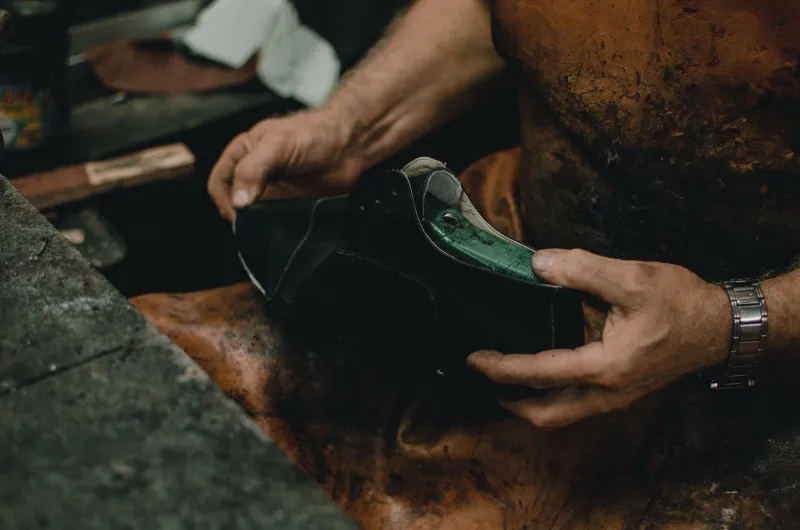
There is a particular atmosphere in a good cobbler’s. The smell of wax and rubber. The low bench. The drawers of heel tips and buckles and laces. The soft percussion of a hammer. It is not a glamorous place, which is precisely why it feels so stylish now. In a culture still noisy with newness, a repair ticket is a small, private act of discernment.
On a recent Saturday, I watched a woman bring in a pair of tan knee-high boots with a worn zip. She did not ask whether they were worth fixing. She asked when they would be ready. At the counter, a man in a navy apron — let’s call him Marek, who runs a narrow shop off a Sheffield high street — turned the boot over, pressed the sole with his thumb, and nodded. He sees more of this now, he told me: younger customers, people who have bought secondhand, people who want a heel replaced before it wears through. “They come in with one pair,” he said, “not five cheap ones.”
That sentence stayed with me. It is the whole argument in miniature.
What earns a second life — and what doesn’t
Not everything should be repaired. That is the first useful thing a cobbler will tell you, usually without judgement. A £20 pair of glued fashion trainers with a cracked upper is unlikely to justify a proper resole. But a well-made leather boot, a Goodyear-welted shoe, a sturdy bag, a favourite loafer with a scuffed toe: these are candidates for a longer life.
The practical hierarchy is simpler than it looks. Heel tips are the first line of defence. Replace them before the plastic or rubber wears into the heel block itself; it is the difference between a small mending job and a structural one. Soles should be resoled before the upper is compromised. Leather needs feeding — a neutral cream or wax a few times a season, more often in winter. Suede needs brushing and protection, not panic. Zips and buckles can usually be replaced. Laces and insoles are easy wins.
And then there is the question of attachment. Some shoes are worth repairing because they are well made. Others are worth repairing because they are yours. A cobbler understands both.
The Saturday circuit
What has changed, perhaps, is the ritual around the repair. Dropping shoes off has become a Saturday errand with its own pleasant rhythm: the walk to the shop, the brief consultation over the counter, the coffee nearby while you wait, the collection a week later. It is a slower sort of shopping, one that asks you to return.
In Bristol, I met a repairer at a monthly repair café — a volunteer-run session in a church hall, all extension leads and patient queues. Priya, who was mending a canvas rucksack, told me that people often arrive apologetic, as if mending were a slightly embarrassing admission of thrift. “Then they see someone else with a better coat than theirs waiting for a zip,” she said. “And they relax.”
That is the quiet shift. Repair is no longer only about saving money. It is about taste, and time, and the kind of objects you want to live with. A resoled boot is not a compromise. It is an edited wardrobe in action.
Why this is a style decision, not a scrimping one
The most interesting wardrobes I see are not the ones with the most in them. They are the ones where things have been kept. A coat with a repaired lining. A bag with a new strap. Shoes that have been polished rather than replaced. This is not nostalgia for a Britain of cobblers on every corner — although many high streets still have one, often tucked between a dry cleaner and a phone shop. It is a forward-looking way to dress: fewer, better, and cared for.
There is also a quiet environmental logic, but I would rather not lead with it. The style argument is stronger. When you repair a pair of shoes, you are making a decision about how you want to look and how you want to live. You are choosing the slightly worn-in over the box-fresh. You are saying that your taste is not disposable.
As we move through 2026, with new collections arriving faster than ever, the Saturday shoe repair feels almost subversive. It is slow. It is local. It requires a conversation. And it produces the kind of personal patina that no new purchase can fake.
A small maintenance calendar for the year ahead
Keep it simple. In winter, wipe salt and rain from leather when you get home, and let shoes dry away from direct heat. Feed leather monthly if you wear the same pair often. Replace heel tips the moment they feel uneven. Rotate your shoes where you can — a day’s rest does more than most products. Use shoe trees if you have them; newspaper will do in a pinch. Take boots in for a check before the sole wears through, not after.
And once in a while, on a Saturday, take something to be mended rather than replaced. Stand at the counter. Accept the paper ticket. Walk out with the small, private satisfaction of having chosen the longer way round. It is, quietly, one of the most stylish things you can do.