Before the Streetlights: The Saturday Matinee and the Lost Art of an Afternoon Out
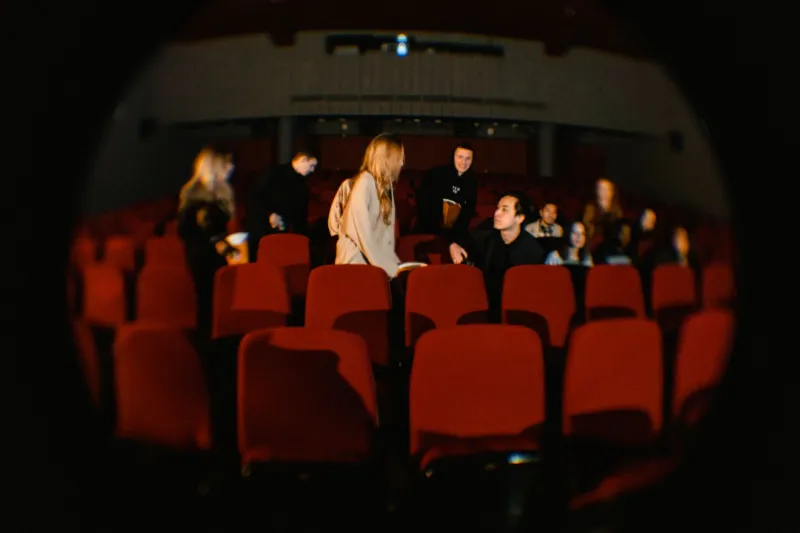
At twenty past two on a Saturday, the Picturehouse on the high street is doing a brisk trade in something that used to feel like a compromise. The queue is short. The lights are already low. There is a woman in a good coat reading the listings with the concentration of someone choosing a wine, and a man with a paper cup of coffee small enough to finish before the trailers end. Nobody is in a hurry. The afternoon is doing what afternoons rarely do in Britain in November: it is going somewhere, and it is doing it in daylight.
The Case for Finishing Before Dark
The matinee has shed its old reputation. For years it was what you booked when the evening was impossible — the babysitter fell through, the train times were awkward, the tickets were too dear. It was culture with a sensible hat on. In 2026, the afternoon showing has become something better than that: the grown-up answer to a culture diary that has become too expensive, too late and too loud.
A 2pm curtain at the National, a 2.30 screening at the Everyman, a regional touring production at 2.30 on a Saturday: these are not lesser versions of the evening. They are the same work, seen by an audience that has chosen daylight. You get the full thing — the lights, the hush, the programme, the performances — and then you get the rest of your day back. There is a particular pleasure in leaving a theatre while the sky is still a pale, useful grey, rather than filing out into a dark street with everyone else and queueing for a bus you don’t really want.
A Ticket That Asks Less of You
Money is part of it. Matinees often sit £5 to £10 below evening prices, and the cheaper seats are easier to find. But the real saving is logistical. You don’t need to solve dinner. You don’t need to book a babysitter for the whole night. You don’t need to decide whether you are the sort of person who goes for a drink afterwards or the sort who quietly slips away. The afternoon asks a simple question — can you be free at two? — and then it lets you go.
That low-stakes quality is why it suits the way we are going out now. Britain’s cultural appetite has become more intimate, more local, more interested in a good thing well done than a big thing endured. The matinee fits that mood. It is culture you can say yes to on a Thursday, without rearranging your entire weekend around it.
The Matinee Wardrobe: Soft, Quiet, Ready for Weather
Matinee dressing is its own small discipline. It should look like you have somewhere to be, because you do, but not like you are auditioning for the evening. Think of the clothes you would wear to a good lunch: a knit with shape, trousers that hold a crease, a coat that can handle a queue. Add a scarf. The auditorium will be warm; the street will not. Layers are the whole trick.
A soft bag is better than a structured one — something that fits a programme, a pair of gloves and a paperback, not a tote full of everything you own. Shoes should be able to walk home, because the walk home is part of the plan. And jewellery should be quiet: no bracelets that click against the armrest, no earrings that catch the light when the screen goes dark. The matinee has its own etiquette, and most of it is just consideration in a nice coat.
Small Rituals, Proper Afternoon
The matinee is made by what happens around it. A flat white at 1.45, taken standing at the counter or sitting by the window, sets the tone better than a pint ever could. It is a small, civilised pre-theatre of your own. Then the thing itself: no rustling, no interval sprint, no checking your phone. Let the afternoon hold you.
Afterwards, eat late. A bowl of soup at 4.30, a sandwich and a slice of cake, a plate of something warm in a café that is beginning to think about its evening trade. This is not dinner; it is the punctuation mark. Then walk home the long way if you can. The point of the matinee is not just the film or the play. It is the shape of the day: coffee, culture, food, air. A day with a beginning, a middle and an end, all before the streetlights come on properly.
The Walk Home Is Part of It
There is a particular kind of British afternoon light in November — thin, silver, gone by four — and the matinee lets you spend it well. You come out into a street that is still doing its Saturday business. The shops are open. Someone is sweeping. The first Christmas lights are being tested in a window. You are not in the crush of the evening; you are ahead of it. That feeling is worth the ticket price on its own.
It is also a small act of optimism. You are betting that the afternoon is worth using, that culture does not have to be a nighttime event, that you can do something lovely and still be home for a cup of tea and the papers. In a year that has made many of us more careful about how we spend our time and money, that bet feels less like a compromise and more like good sense.
So next Saturday, look at the 2pm listings before the 8pm ones. Take the good coat. Have the coffee. See the thing. Be home before the dark closes in. The matinee is not the interval before the evening; it is the main event.