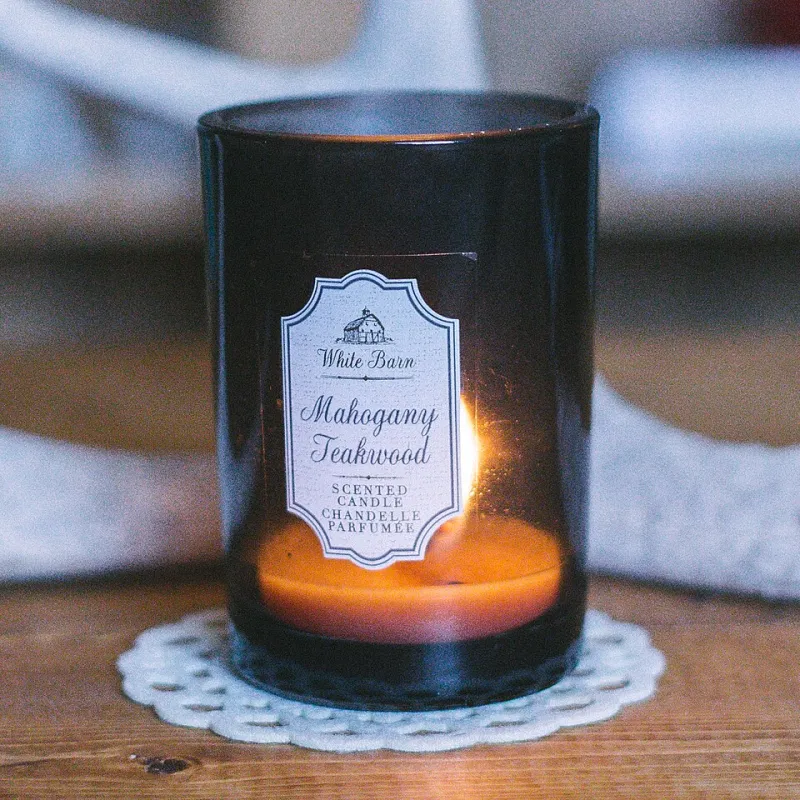
A Candle for Leftovers: The Quiet Case for Dressing the Weeknight Table
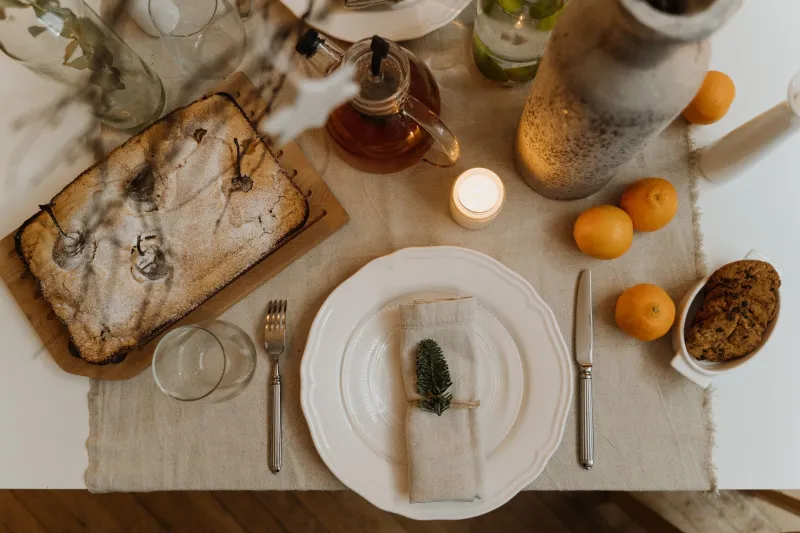
It is a Tuesday in November. The sort of evening when the sky has been charcoal since four o'clock and the idea of cooking anything ambitious feels faintly absurd. In kitchens across Britain, the same scene is playing out: a plate of leftovers, a fork, a glass of water, and the quiet hum of a radiator. And yet, increasingly, something else is being added to that picture. A cloth napkin, folded once. A proper plate, not the chipped one that lives by the sink. Perhaps a single candle, its flame low and steady.
This is not about entertaining. There is no guest list, no occasion, no expectation of a photograph for social media. It is about something subtler: the decision to treat an ordinary weeknight meal as if it deserves a little care. And it is a decision more and more of us are making.
The Case for a Tuesday Candle
We have spent years being told that ceremony belongs to the big moments — birthdays, anniversaries, the good china trotted out for Christmas. The rest of the week gets the scrappy version: eating standing up, eating from the pan, eating while scrolling. But there is a growing sense that this is a false economy. A meal is still a meal, even if it is reheated. An evening is still an evening, even if it is unremarkable.
The writer and broadcaster Michael Pollan once noted that the ritual of a shared table is as important as the food itself. And while he was talking about families, the principle holds for a table set for one. The act of laying a cloth, lighting a candle, and sitting down signals to your brain that the working day is over. It is a small boundary, but a meaningful one. In a culture that increasingly blurs the line between work and rest, that boundary is worth protecting.
It is also, frankly, a pleasure. There is a reason why the Danish concept of hygge took hold so quickly in Britain: we are a nation that understands the value of a low light and a warm corner. The Tuesday tablecloth is simply hygge with a bit of structure. It does not require a new kitchen or a bigger dining table. It requires a decision.
More Than a Napkin
I have been thinking about this because of a conversation I had with a ceramicist in Stoke-on-Trent earlier this year. She told me that her best-selling piece is not a dinner plate or a serving platter, but a small, slightly wonky side plate — the kind you might use for a slice of toast. "People are buying them in pairs," she said. "Not for guests. For themselves. They want something that feels a bit special for the small meals."
That sentiment is echoed across the British homeware scene. At Toast, the emphasis has long been on honest materials and generous proportions — linen napkins that soften with every wash, stoneware mugs with a satisfying weight. The Conran Shop continues to champion the idea that everyday objects should be a joy to use. Even John Lewis has noticed the shift, with its own-brand table linens expanding into muted, mix-and-match colours that feel less like formal dining and more like quiet self-care.
The message is clear: the tools of ceremony do not need to be precious. A charity-shop linen napkin is just as good as a designer one. A simple glass tumbler works perfectly well for water. The point is not to spend money; the point is to pay attention.
The Practical Ceremony
So how do you actually do it? The good news is that the barrier to entry is almost nonexistent. Start with one thing: a cloth napkin instead of a paper towel. Then add a second: a candle, even a tea light in an old jam jar. Then a third: clearing the table before you sit down, rather than eating amid a pile of post and unopened bills.
There is a lovely ritual in the simple act of setting a place for yourself. You might smooth the cloth, straighten the fork, pour a glass of something — even if it's just water with a slice of lemon. You might put on a record or a podcast, or simply enjoy the quiet. The food does not need to be fancy. Leftover shepherd's pie, reheated with a splash of Worcestershire sauce, is a perfectly legitimate Tuesday dinner. The ceremony is not about the food; it is about the frame.
One tip from a friend who has mastered the art of the solo weeknight dinner: she keeps a small vase on the table and puts a single sprig of rosemary or a few stems of dried lavender in it. "It takes ten seconds," she says, "but it changes the whole mood. It makes the table feel intentional."
A Table Set for One
There is a particular tenderness in setting a table for yourself. It is a way of saying, without words, that you are worth the effort. In a culture that often equates solo living with loneliness, this small act of self-regard feels quietly radical. You are not waiting for someone else to make the evening special. You are doing it yourself.
And it does not need to be every night. The beauty of a ritual is that it is not a rule. Some evenings will be a bowl of cereal over the sink, and that is fine. But once or twice a week, when the light is low and the day has been long, there is something deeply satisfying about lighting a candle and sitting down properly. It is a way of marking time, of saying: this day happened, and I was here for it.
The Quiet Reward
The Tuesday tablecloth is not about perfection. It is about presence. It is about recognising that the ordinary dinner — the leftovers, the solo meal, the unremarkable Tuesday — is still a moment of your life. And moments deserve a little ceremony.
So tonight, if you find yourself reheating something in the microwave, consider reaching for the good plate. Fold a napkin. Light a candle. Sit down. It costs almost nothing, and it changes everything.