The Forty-Five-Minute Holiday: Why Britain’s Lunchtime Concerts Are the Reset We Need
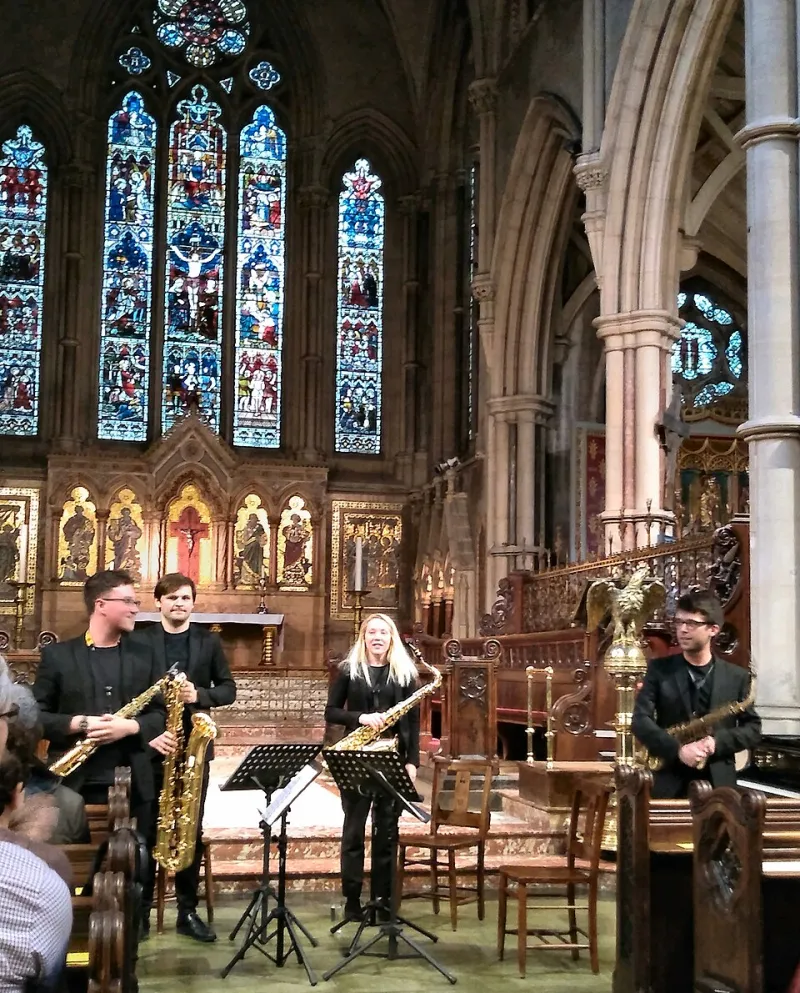
Photo: AndyScott, CC BY-SA 4.0, via Wikimedia Commons
There is a particular kind of tiredness that sets in around 1pm on a Wednesday. It is not hunger, exactly. It is the feeling that the day has already been long and is not nearly over. The usual solutions — another coffee, a desk sandwich, twelve minutes of scrolling — do not really work. They just move the tiredness around.
A lunchtime concert does work. Not because it is improving, or worthy, or a sign that you are the sort of person who understands sonatas. Because it is forty-five minutes in a room with other people, listening to something being made in real time. That is a different kind of break. It resets the ears, and the ears are connected to everything else.
The case for the short concert
Evening concerts are lovely, but they are also a commitment. You need to get home, change, eat, travel back into town, sit still for two hours, then negotiate the last train. Lunchtime concerts ask much less. You can go in your work clothes. You can leave your coat on. You can be back at your desk before anyone has noticed you were gone.
And the music is often excellent. Conservatoires use lunchtime slots for young performers who are about to be famous. Churches host visiting choirs and chamber groups. Concert halls programme short recitals for people who cannot do evenings. The standard is not amateur; it is simply unpressured.
The other advantage is cost. Many lunchtime concerts are free, with a retiring collection. Others charge £5 or £10. That is cheaper than a cinema ticket and considerably better for the nervous system.
A tasting menu of rooms
In London, St Martin-in-the-Fields has been running lunchtime concerts for decades, and the setting — a church in the middle of Trafalgar Square — does half the work for you. Wigmore Hall programmes short daytime recitals that feel like a secret handed to whoever is free at 1pm.
Outside the capital, look at cathedrals, major churches and university music departments. St George’s Bristol, St Ann’s Church in Manchester, the concert halls in Leeds, Birmingham, Cardiff and Glasgow: the names change, but the format is remarkably consistent. A piano, a string quartet, a singer, a room with good acoustics and an audience of people who have decided to spend their lunch hour differently.
The best ones are not always the grandest. A church hall with bad coffee and a brilliant cellist can be more moving than a formal recital in a perfect auditorium. Look for notices in church porches, local listings, conservatoire websites and the newsletters of music societies. They are not always well advertised, which is part of the charm.
First-timer etiquette
Arrive ten minutes early. Sit near the back if you might need to leave. Turn your phone off — not silent, off — and keep it out of sight. Do not unwrap sweets during the quiet bits. Applause is usually welcome at lunchtime concerts, but if you are unsure, follow the crowd. Do not feel obliged to stay for the whole thing if you have to get back; a quiet exit between pieces is fine.
If it is a church, you may be asked for a donation. Give what you can. If it is free, still put something in the basket. These events run on small generosity.
Make it ordinary
The mistake is to treat a lunchtime concert as a special outing. It is better as a habit. Once a month, maybe. Once a fortnight if you are lucky. Put it in the diary like a haircut or a dental appointment, except enjoyable. Go alone if no one else is free. Go with a colleague who looks like they need it. Go in the rain, when the church smells of damp stone and the music sounds even better.
We are very good in Britain at saving culture for the evening, dressing it up and making it expensive. The lunchtime concert is the opposite: short, cheap, local and slightly improvised. It is culture that fits inside an ordinary afternoon. And that, frankly, is the kind of holiday most of us can actually take.