Lamps On, Ceiling Off: The New Rules of British Winter Light
There is a moment, somewhere around the first week of November, when the British evening stops arriving and starts closing in. The curtains go shut at half past four. The kettle becomes a personality trait. And in thousands of homes, a small domestic debate begins: do we put the big light on, or do we admit that we have become people who live by lamplight?
The answer, increasingly, is the lamp. Not because the ceiling light is broken, but because it has been quietly demoted. In the well-considered British home, overhead lighting is now reserved for cleaning, finding a lost earring, and the specific chaos of wrapping presents. For everything else — reading, eating, hosting, sitting with a cup of tea and absolutely no plan — the light comes from lower down, in smaller pools, at a warmer temperature.
The Ceiling Is Not a Personality
The overhead light has a reputation problem, and it is not entirely unfair. A single pendant in the middle of a room tends to flatten everything: faces, corners, the nice bit of moulding you paid someone to restore. It makes a sitting room look like a waiting area. It makes a kitchen look like a canteen. It makes guests look as though they have just been asked to explain themselves.
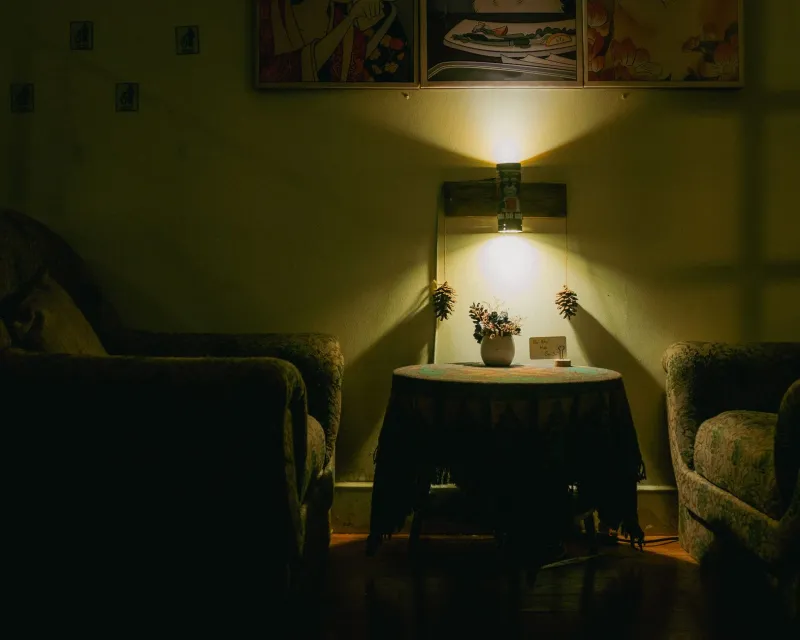
This is not a new complaint, but it has become a more deliberate one. The shift is less about design rules than about atmosphere. A room lit from one central point is a room with a single mood. A room lit by three or four smaller sources is a room that can change its mind. One lamp for the sofa, one for the corner, one small glow on the sideboard, a picture light doing something flattering to the wall. None of it is expensive. All of it is intentional.
A Small Theory of Pools
The best winter lighting works in pools rather than floods. Think of the difference between a streetlamp and a candle on a windowsill. One tells you where you are; the other tells you how it feels to be there.
In practice, this means placing light where you actually sit, read, eat or talk. A floor lamp behind a chair throws light over a shoulder instead of into a face. A table lamp on a console makes a hallway feel like it is expecting you. A small lamp in the kitchen, on after dinner, turns the room from a place of work into a place of lingering. Even a bathroom benefits from a low, warm light beside the mirror rather than a single blaze above it.
The aim is not darkness. It is contrast. A room with a little shadow is a room with depth. The British winter already gives us enough grey; what we want indoors is not more uniformity but a bit of warmth with somewhere to fall.
The Practical Layer
If you are new to the lamps-on approach, start with bulbs. A warm white bulb — around 2700K — will do more for a November evening than almost any new piece of furniture. Avoid anything too blue or too bright in a living room; save the crisp light for the bathroom mirror and the desk. If you have a dimmer, use it. If you do not, a smart plug or a simple inline dimmer is a modest upgrade that changes the whole mood of a room at 8pm.
Then think in threes. One overhead light is a statement. Three smaller lights are a conversation. A floor lamp, a table lamp and a third source — a picture light, a shelf light, a candle — give a room enough layers to feel alive. Put at least one of them on a separate switch or plug so you can adjust the room as the evening goes on. The light that suits a 5pm cup of tea is not the light that suits a 10pm conversation.
And do not overlook the hallway. The first five feet of a home do a great deal of emotional work. A small lamp on a hall table, switched on before guests arrive, is a welcome that costs almost nothing and says quite a lot.
Guests, Shadows and the End of the Evening
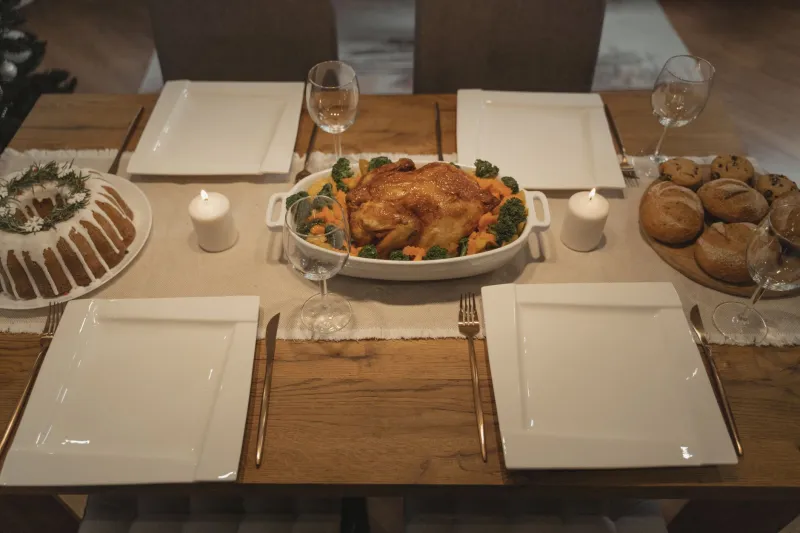
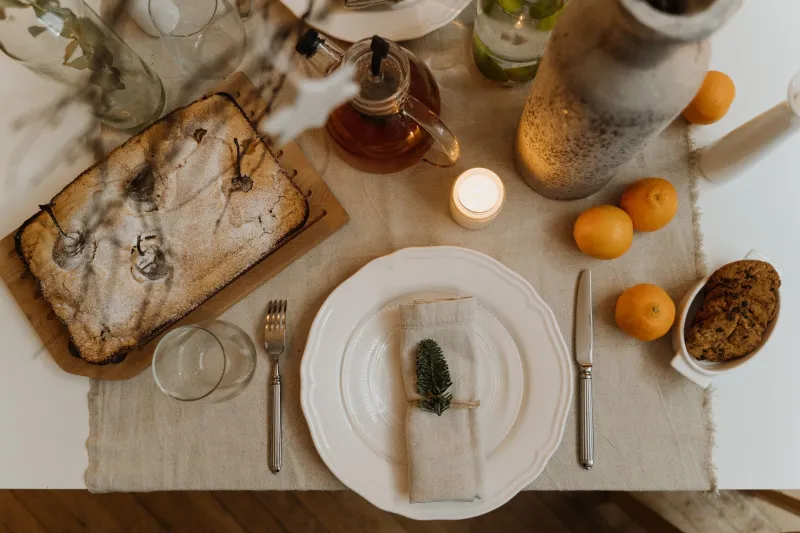
There is a social dimension to all this, too. Harsh overhead light makes a room feel functional; softer light makes it feel hospitable. It gives people somewhere to put their eyes. It makes a kitchen table feel like a destination rather than a surface. It allows a dinner to end slowly instead of snapping shut when someone reaches for the switch.
This is perhaps why the lamps-on habit has spread so quietly. It is not a trend that requires a renovation. It is a series of small decisions — a bulb, a plug, a second lamp — that add up to a different kind of evening. The big light stays off. The room settles. The kettle goes on again.
As winter deepens, that is worth more than a perfect scheme. A well-lit home is not the brightest one. It is the one that knows where to put the light, and when to turn it down.